
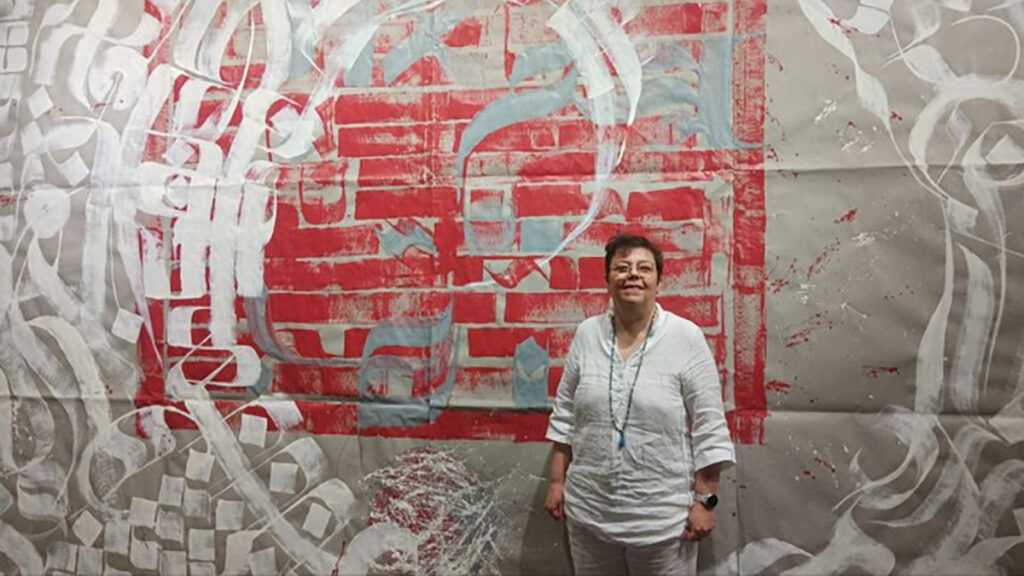
Loriana Espinel is a Colombian artist based in Houston. Her practice centers on El Árbol de los Anhelos: Codex of Human Rights, an ongoing body of work composed of thirty large-scale illuminated paintings, each dedicated to one article of the Universal Declaration of Human Rights. Developed through calligraffiti, a practice that moves between calligraphy, typography, and graffiti, the codex approaches writing as structure and space, transforming the language of human rights into monumental form.
The visual language of calligraffiti first consolidated in her solo exhibition Chiribiquete, where she began working at scale and exploring writing as spatial architecture. That investigation laid the groundwork for the Codex.
Espinel’s work examines text, mark-making, and composition as living systems. Drawing from historical writing traditions and contemporary visual languages, she approaches script as construction, using repetition, layering, and scale to build immersive environments.
Her background includes multimedia theater and large-scale installations. Projects such as Anaconda combine sculpture, sound, and spatial experience, extending her interest in collective memory and embodied perception.
Since 2021, she has worked as an immigration process interpreter, facilitating communication for asylum seekers in legal contexts. This sustained engagement with testimony and displacement informs the ethical and political dimension of her current practice.
In 2026, she was selected to participate in FORMA, a research-based contemporary art program at the Escuela Experimental de Arte.