
When I first encounter a problem, I tend to approach it very literally. As I go deeper, however, my certainties begin to fade.
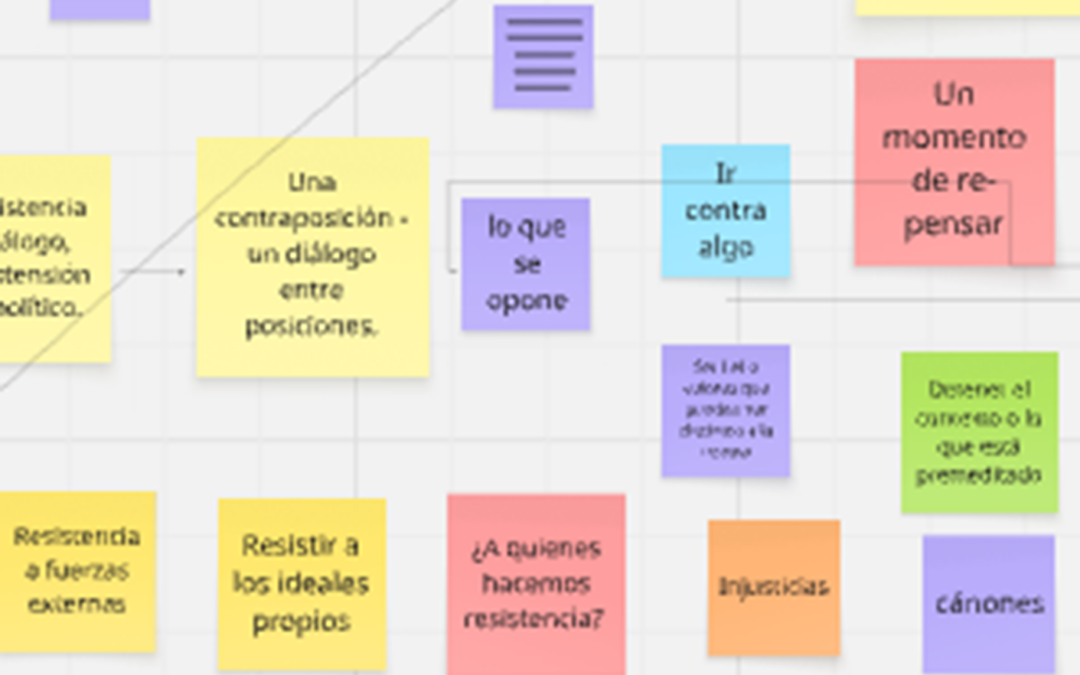
The word contra confused me. Of course I know it in everyday situations — “Es que usted lleva la contra en todo, ¿ah?” — but I could not understand why I was unable to grasp it in the context of artivism.
I now realize that I was trying to fit the word into a rebellious or anti-establishment narrative. But counter does not only mean being against power. It means being against a specific structure of power or meaning. Depending on how it is used, it shows where one stands in the field — on which side of an argument or conflict one is positioned.
The idea of archive and counter-archive unsettled me even more. In a literal sense, an archive names and preserves objects. My first reaction, therefore, was to imagine disrupting the archive itself.
Here, however, the archive functions as an idea. Because of this, the notion of counter-archive takes on a deeper meaning. There is an archive that works as the symbol of a narrative, and there is a counter-archive as an action that can destroy, complete, or transform the original meaning of that archive.
This is an artistic action that involves the permanent alteration of something that has been classified. It opens the possibility of other narratives existing.
An archive is anything that has been organized and put away. It usually speaks about the past and carries a history that may or may not be true. By intervening in the archive — by reorganizing it, adding to it, or removing from it — new layers of meaning can emerge. These layers can tell stories that were never visible before